
By Carol Gstalder
KEY TAKEAWAYS
- Product origin can increase interest in visiting the place behind a food, beverage, or agricultural product.
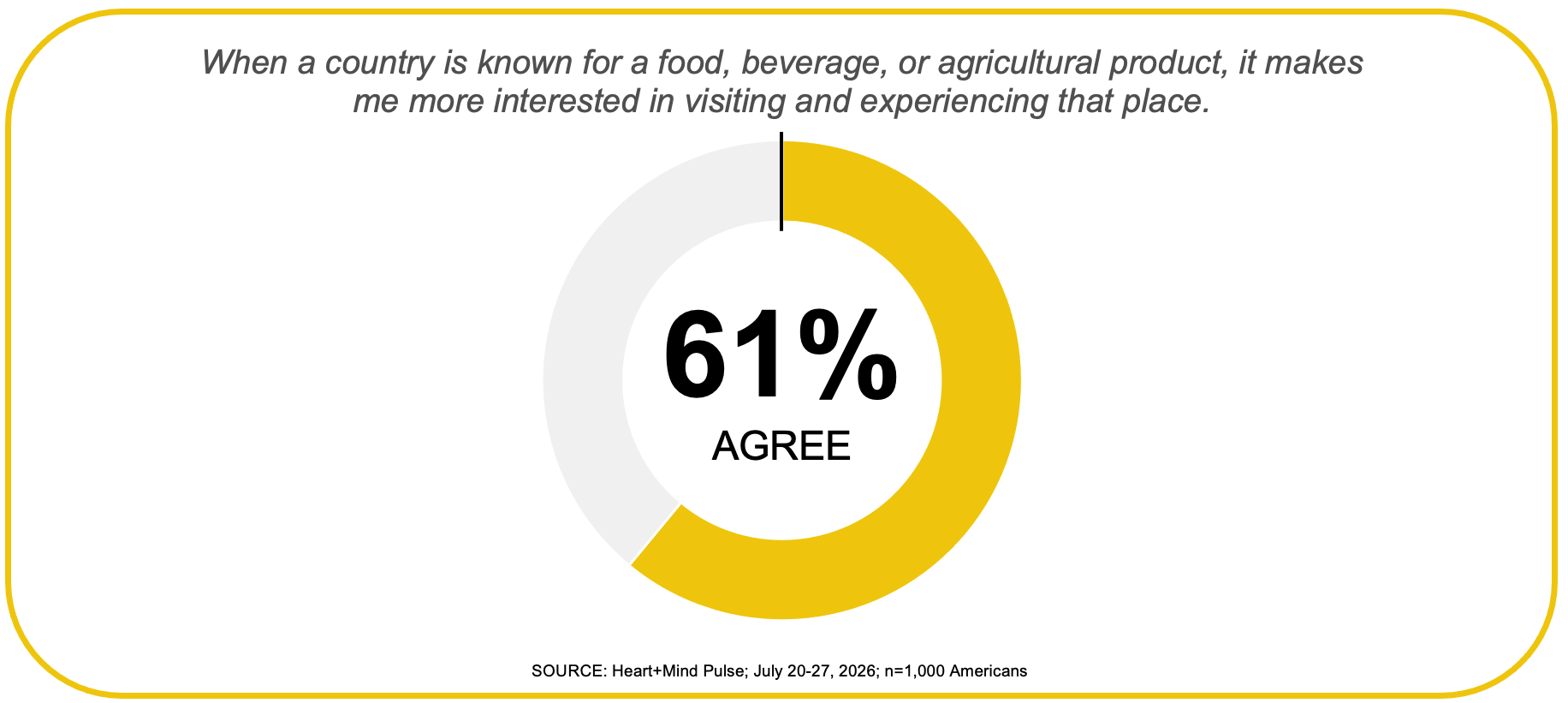
- Sixty-one percent of consumers say a country’s reputation for a product makes them more interested in visiting and experiencing that place.
- Travelers show the most interest in tasting products at their source and exploring local restaurants, markets, shops, farms, and production sites.
- Tourism organizations can turn product awareness into travel consideration by creating tangible, place-based experiences.
- Different age groups may respond to different levels of immersion, from accessible local stops to planned origin-themed travel.
Product origin tourism begins with a simple connection: people often become curious about a place through something grown, made, roasted, brewed, or distilled there.
Origin already helps communicate quality, standards, authenticity, and trust. Our research suggests it can also shape interest in travel. A product associated with a particular country or region can introduce people to the culture, landscape, traditions, and communities behind it.
That connection gives tourism boards, destination marketers, economic development leaders, industry groups, and origin brands a practical opportunity. A product people already admire can become an invitation to experience the place it comes from.
Product origin can influence travel interest
Our research found that 61% of consumers agree that when a country is known for a food, beverage, or agricultural product, it makes them more interested in visiting and experiencing that place.
Interest is especially strong among adults ages 18 to 34, at 71%, and adults ages 35 to 54, at 69%. These findings indicate that origin has the potential to influence future travel consideration, particularly among younger and midlife audiences.
The reason is straightforward. A well-known product gives people a specific and accessible way to understand a destination. The product becomes an entry point to the place, while the experience surrounding it creates deeper meaning.
RELATED: The Many Manifestations of Human Values: Observations from Abroad
Travelers want tangible origin-based experiences
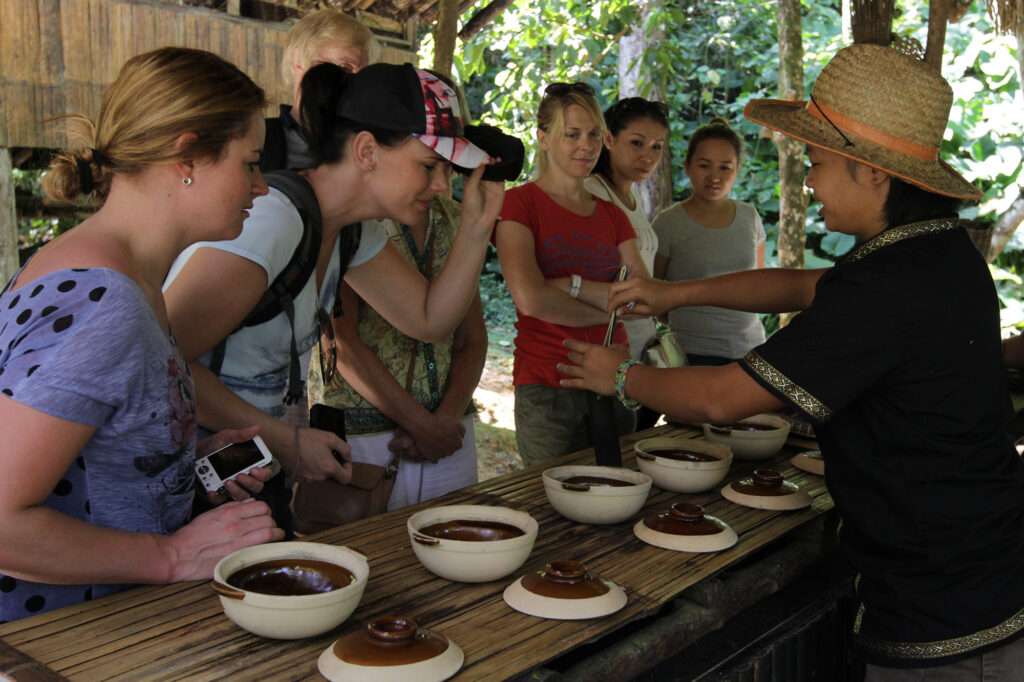
The strongest tourism opportunities are sensory, specific, and rooted in place. Consumers express interest in experiences that allow them to taste a product, discover where it is sold, understand the traditions behind it, and see how it is produced.
Our research found that:
- 42% are interested in tasting foods or beverages in the places they come from.
- 37% want to visit restaurants, markets, or shops known for local specialties.
- 34% want to learn about the people, culture, or traditions behind a product.
- 33% want to visit farms, vineyards, roasters, breweries, distilleries, or other places where products are made.
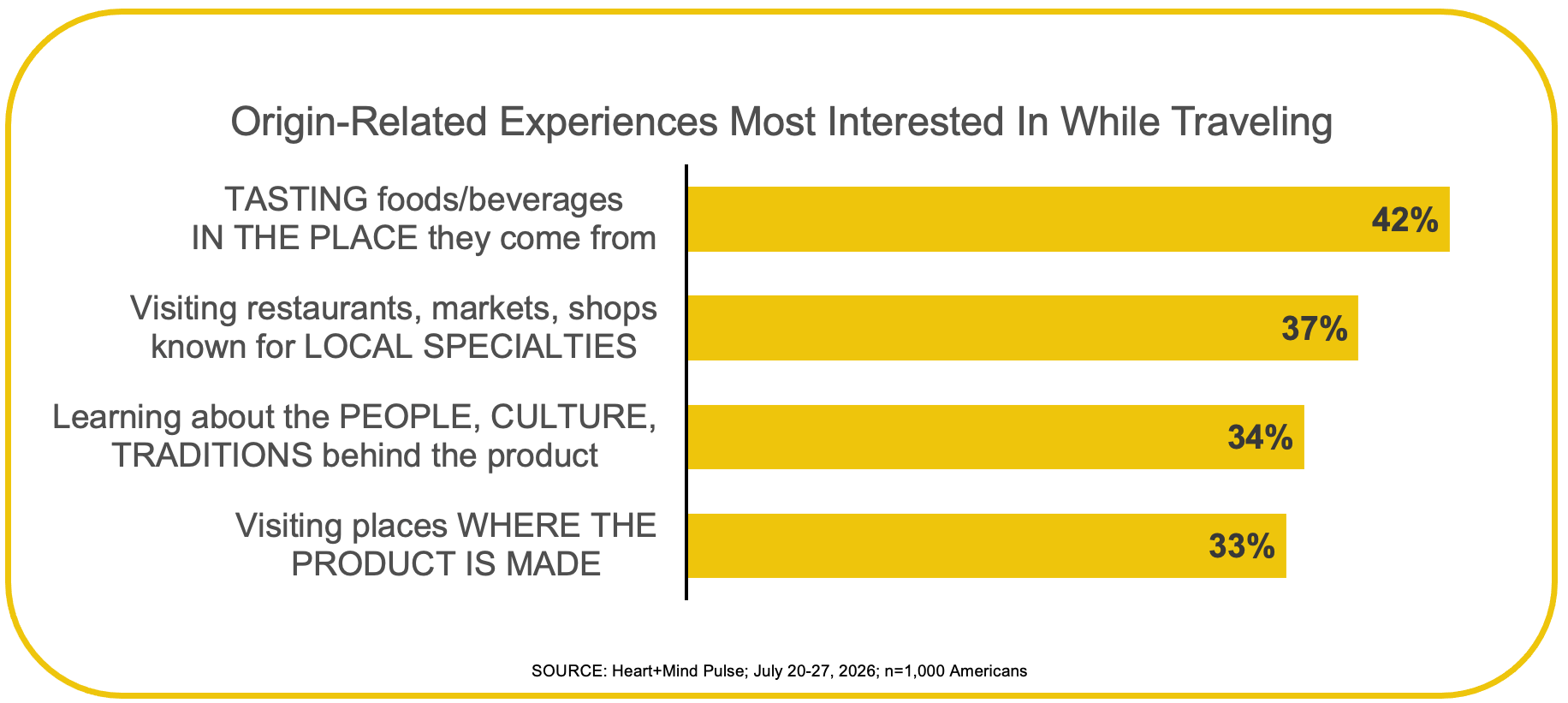
The pattern points to a clear progression. Travelers first want to experience the product directly. They then want to find it in authentic local settings, learn about its cultural context, and see where and how it is produced.
That progression can help destination marketers develop a connected visitor journey rather than a collection of isolated attractions.
Origin connects product branding and place branding
A distinctive local product can give a destination an immediate point of recognition. Wine, coffee, cheese, spirits, fruit, seafood, and other regional specialties often carry associations with particular landscapes, skills, and traditions.
Those existing associations can support place branding. Product communications can create curiosity about a destination, while tourism experiences can add cultural and human context to the product.
Coordination matters. Tourism boards, producer groups, local businesses, and origin brands can reinforce the same story across packaging, advertising, itineraries, events, visitor centers, and digital content. Consistent narratives make it easier for audiences to connect what they know about a product with a reason to visit its place of origin.
Age can help shape the tourism experience
Age provides a useful planning lens for origin-based tourism.
Younger adults appear especially open to immersive and planned experiences, including food or beverage tours and travel connected to agricultural or culinary heritage. These audiences may respond to itineraries that combine tastings, production visits, cultural interpretation, and interaction with local communities.
Older adults may be more likely to encounter origin through familiar destination touchpoints, including restaurants, markets, and specialty shops. These experiences can offer a flexible and accessible introduction without requiring a dedicated tour or itinerary.
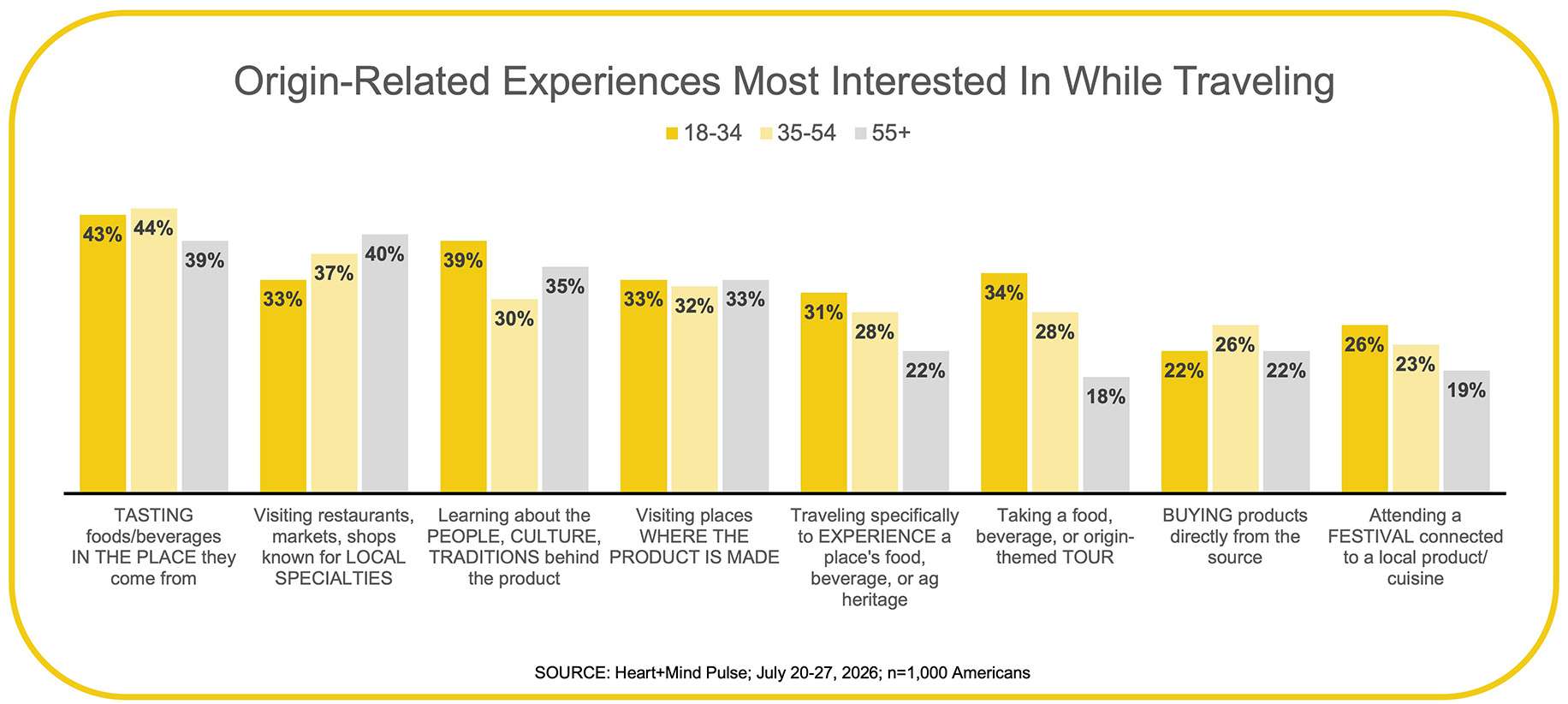
Destination marketers can use both approaches. Broad discovery experiences can make origin visible throughout a destination, while deeper programs can serve visitors who want to organize more of their trip around a local product or culinary tradition.
Turning origin into a tourism strategy
An effective origin-based tourism strategy begins with the visitor experience. Organizations should identify what people can taste, visit, learn, and see within the destination.
Practical opportunities may include:
- Tasting routes that connect local producers, restaurants, and retailers
- Market guides highlighting regional ingredients and specialties
- Farm, vineyard, roastery, brewery, or distillery visits
- Culinary and agricultural heritage tours
- Producer stories that explain local knowledge and traditions
- Seasonal festivals, demonstrations, workshops, and harvest experiences
- Travel content that connects a familiar product with a specific place
Each experience should make the relationship between product and place easy to understand. Visitors should leave knowing why the product comes from that location, who contributes to it, and how the destination has shaped its character.
Give people a reason to experience the place
Origin can provide a powerful starting point for tourism marketing because it builds on interest that already exists. A familiar product can spark curiosity and give potential visitors a concrete way to picture the destination.
The opportunity is to turn that curiosity into an experience people can act on. Tourism boards, regional leaders, industry groups, and origin brands can make the connection stronger by helping people taste the product, meet the people behind it, explore the local culture, and visit the places where it is made.
The strongest origin strategies make the destination an essential part of the product story. They give people a clear reason to experience that story for themselves.
Connect with a Heart+Mind consultant to learn more about how work with destinations on brand strategy and visitation.
Survey Methodology: The survey consisted of 1,000 online interviews conducted July 20-26, 2026. Respondents for this survey were selected from among those who have volunteered to participate in online surveys and polls.
The data are gathered from one of the largest online panels, which attempts to approximate a cross-section of the U.S. population. To ensure representation of a wide variety of demographic groups, we impose quotas by age, gender, and ethnicity based on U.S. Census data for people aged 18 and older.