KEY TAKEAWAYS
- Affordability reaches beyond price. Economic pressure is shaping people’s sense of security, freedom, stability and peace of mind.
- People want action, but expectations are low. That gap matters for any leader or organization trying to earn trust.
- Traditional audience labels obscure important differences. People are more complex and persuadable than political, demographic or customer segments often suggest.
- Knowing what people say is only the beginning. The deeper opportunity is understanding the consequences, emotions and values underneath their responses.
- Customers bring the outside world with them. The pressures shaping people’s lives influence how they evaluate value, messages, experiences and organizational claims.
What the 2026 Election Revealed About Customers, Trust and Choice
The election told us more than how Americans voted. It revealed pressures and priorities that follow people into the choices they make as customers, employees, members, patients, travelers and investors.
Those are some of the most useful post-election voter insights for business leaders.
Shortly after the 2026 midterm election, Heart+Mind Strategies conducted a VoterView™ post-election survey to understand what drove voters’ choices and what they expected next. During our America Decided. Now What? webinar, we went a step further by bringing voters from across the country into a live Lightning Lab™ and listening as they described their priorities, pressures, expectations and concerns.
The result was a window into the same people every business, institution, association and organization is trying to understand. For leaders, the value lies in looking beyond the vote to understand what is shaping people’s choices more broadly.
1. Affordability is really about security.
Our VoterView research confirmed something apparent throughout the election: affordability matters and it is a multi-layered concept.
Four in 10 voters (42%) selected inflation, the economy and affordability as their number one issue. Concern cut across financial circumstances, but it took different forms. Voters with fewer assets experience greater immediate financial strain, while, perhaps surprisingly, voters with more than $500,000 in investable assets express greater concern about the cost of living, groceries and other necessities.
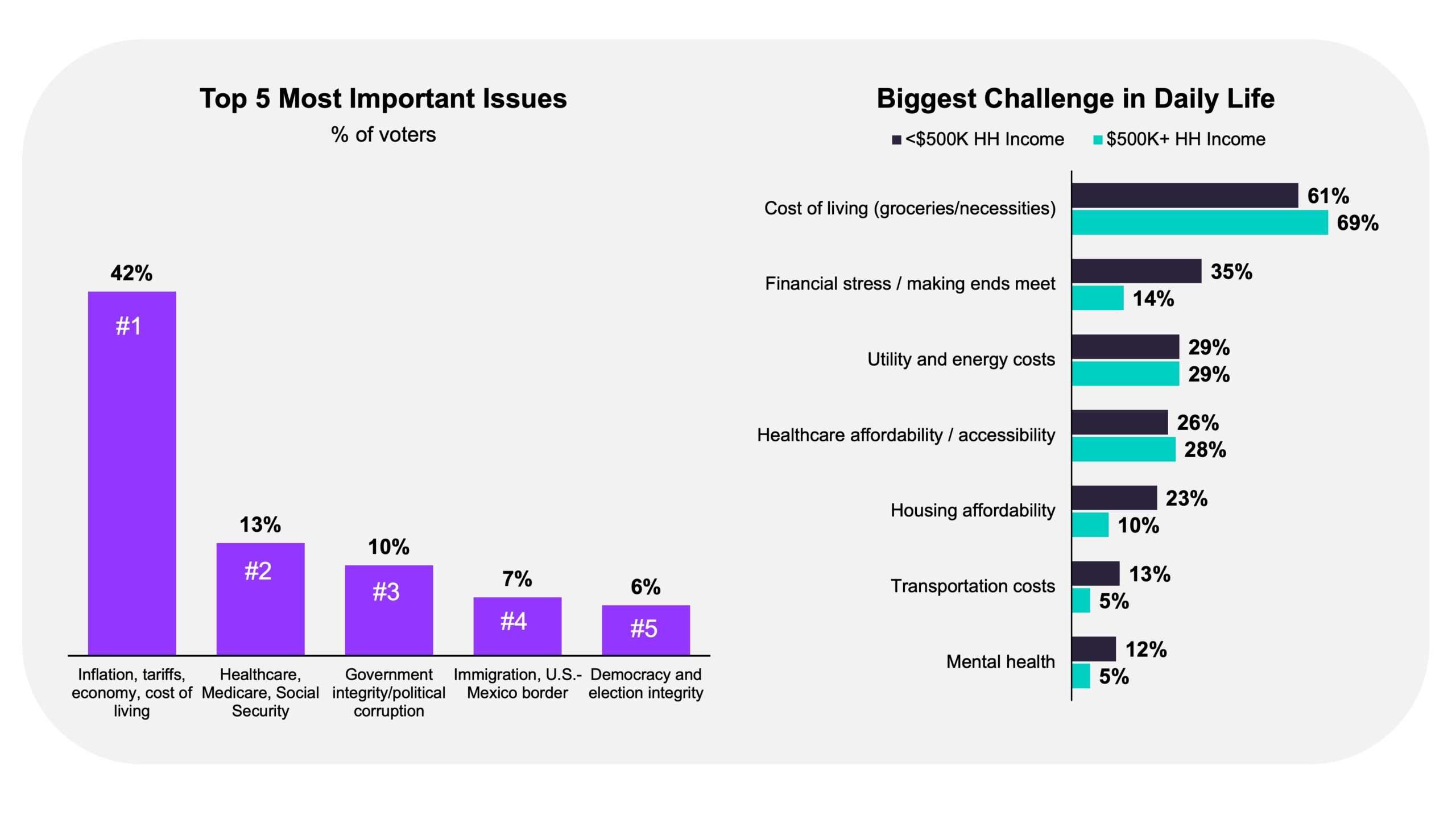
Post-election voter insights from our live Lightning Lab brought those numbers to life. When voters talked about their daily struggles, money dominated the conversation, followed closely by healthcare. Participants mentioned inflation, gas, food, housing, medicine, insurance and fear of medical debt.
Our deeper exploration revealed what those pressures meant personally.
For voters with fewer investable assets, affordability affects daily quality of life and the ability to provide for family, producing anger and frustration. More affluent voters connect those concerns to the economic stability and security of their communities and country.
Those paths ultimately converged.
As Jennifer Airey explained during the webinar, “People need to feel secure again. They need peace of mind. It is really telling to see that it’s not just because affordability affects people that are in a financial crisis. It’s underpinning and making many insecure.”
That distinction matters for businesses.
A company looking only at price sensitivity may see a customer concerned about cost. A company that understands the underlying motivation may see someone trying to protect stability, independence, family or peace of mind.
The second understanding gives you far more to work with.
2. People want meaningful action, but they are skeptical they will get it.
One of the sharpest VoterView findings is the gap between what voters want to see happen and what they expect will happen.
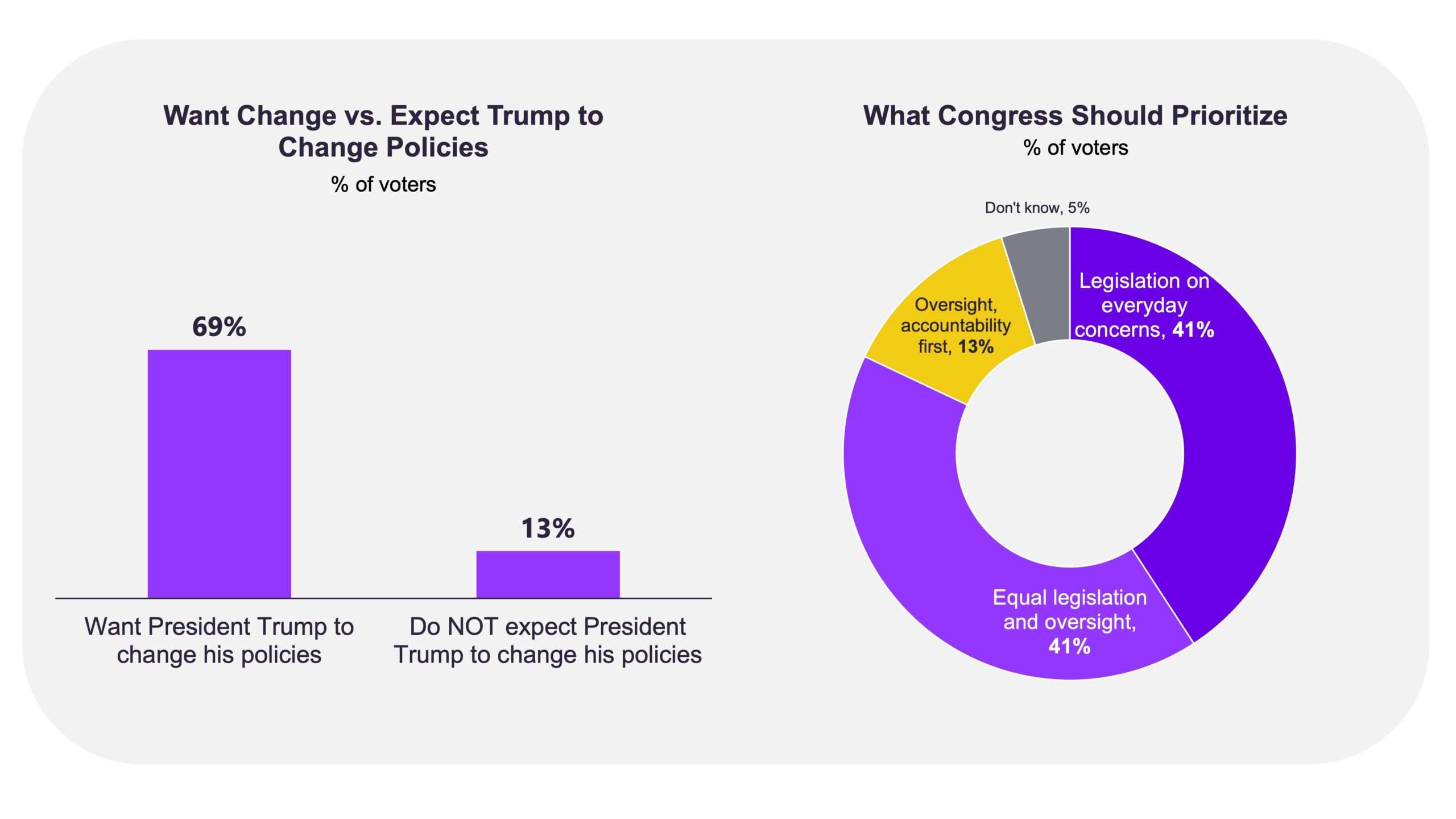
Seven in 10 voters (69%) want President Trump to change his policies in response to a Democratic-controlled Congress, while only 13% of voters expect that change to happen.
The majority of voters (82%) say they want their leaders focused on everyday concerns (41% say they want equal focus on everyday concerns while still holding government accountable).
As Brittany Lucas put it during the webinar, “Voters want change, they want action. They do want accountability, but action trumps accountability, and they’ve got to make sure they deliver, and don’t get too focused on hearings when people want bread and butter issues tackled.”
That expectations gap has a direct parallel in business. Customers hear promises constantly. Employees hear commitments. Members hear strategic priorities. Communities hear plans.
When people are already skeptical of institutions, another promise has limited value without evidence behind it. Organizations that demonstrate progress, explain what they are doing clearly and connect actions to outcomes have a better opportunity to establish credibility.
Trust increasingly depends on proof.
3. Your audience is more complicated than your segments suggest.
Politics encourages labels: Republican, Democrat, Independent, red state, blue state.
Our post-election voter insights remind us how incomplete those labels can be.
One in eight voters (12%) who voted for Donald Trump in 2024 voted for a Democratic House candidate in 2026. Support for the Make America Healthy Again movement also crossed party lines, with support from 41% of Democrats, 62% of Independents, and 85% of Republicans.
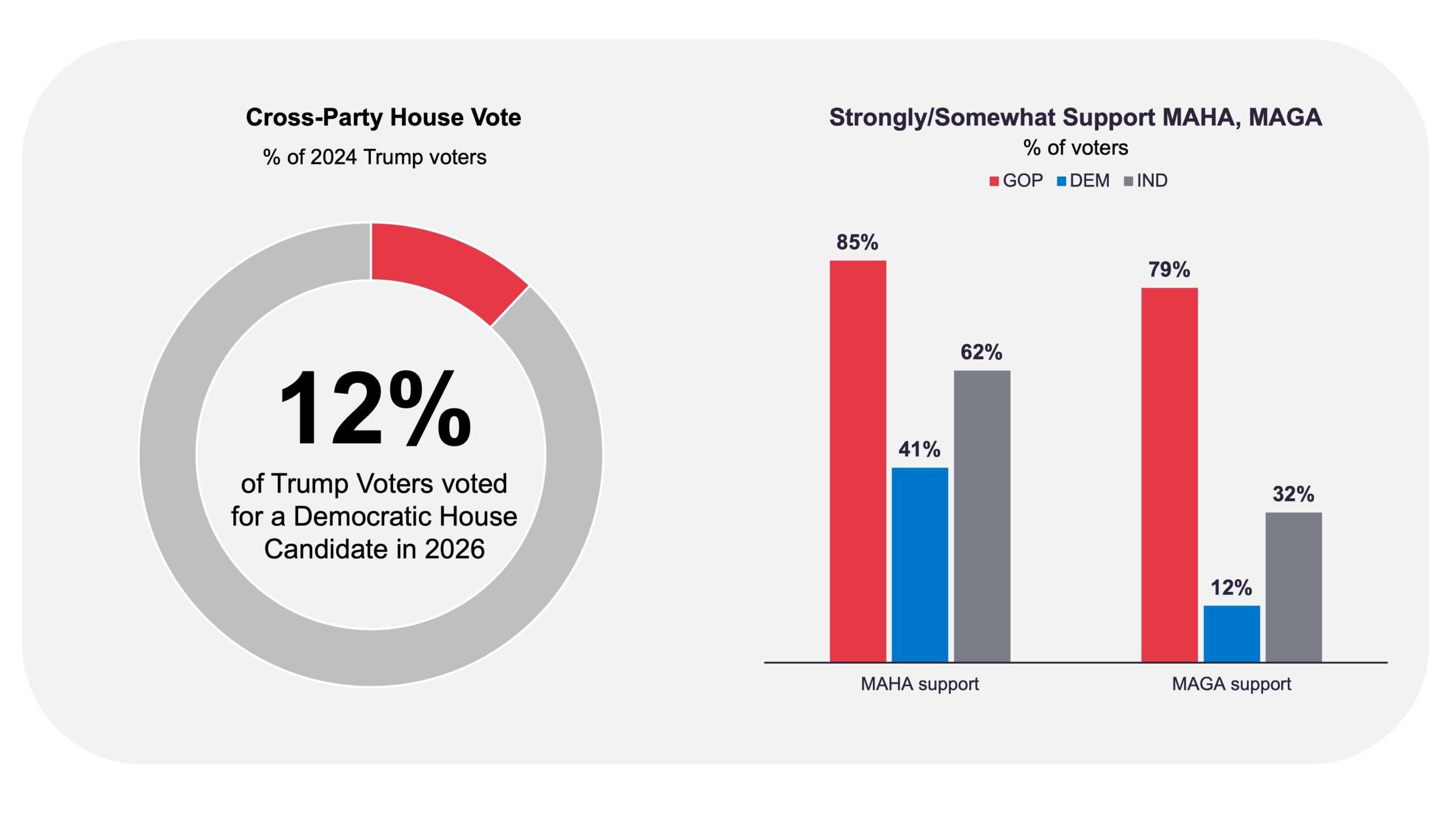
Brittany summarized the implication succinctly: “people are a lot more complicated than red or blue. They’re not falling neatly into one category, and they can be persuaded to change their mind.”
The same principle applies to customer segmentation.
Demographics, purchase history, geography, political identity, income or another behavioral variable can tell you something useful about a person. None tells you everything.
Two people who select the same answer can arrive there for entirely different reasons.
We saw that with the theme of “corruption” during the Lightning Lab. Some participants connected corruption with money and special interests. Others associated it with institutions or adherence to the Constitution. A topline response could put them into the same bucket while missing dramatically different motivations underneath.
For business leaders, that is a useful warning against assuming that the segment explains the person.
RELATED: Understanding Voter Sentiment: The 2024 Election and Future Economic Trends
4. Don’t stop at what people say. Understand why.
In describing the value of doing qualitative research with real people, Mike Dabadie described the Lightning Lab participants this way: “We’re human beings, and we have distinct needs and challenges. We have to listen to our customers, we have to listen to humans and bring that back inside to help [us know]… how do we meet their needs.”
That was also the purpose of combining the post-election voter insights from the VoterView survey with the qualitative insights from the live Lightning Lab. Survey data gave us scale and patterns. The live qualitative research let us explore meaning.
In the Lightning Lab participants moved from identifying an issue to describing its consequences and then to identifying the personal values or priorities connected to those consequences. More than 150 ideas about day-to-day challenges could then be synthesized and prioritized in real time.
The result was richer than knowing that affordability ranked highly. We could see how affordability connected with healthcare, family, stability, freedom, worry, frustration, security and peace of mind.
Organizations can apply the same discipline to their own audiences. Knowing what customers choose is valuable. Understanding why that choice matters to them gives leaders a stronger foundation for strategy.
5. Your customers bring the outside world with them.
The people participating in our Lightning Lab did not stop carrying these concerns when they returned to work, bought groceries, booked a trip, visited a doctor, checked an investment account or interacted with a company.
The pressures shaping the broader environment follow them into those interactions:
- People who feel financially insecure may evaluate value differently.
- People who distrust institutions may demand more proof.
- People exhausted by conflict may respond differently to aggressive messaging.
- People who feel unheard may place greater value on organizations that demonstrate that they have listened.
Those implications can affect decisions across positioning, communications, customer experience, product strategy and research.
Mike made the connection during the webinar: “This is a macro environment within which you, as an organization or as a brand are operating, selling, or providing customer service–and that’s important for how you communicate with your customers.”
That does not require brands to turn every cultural or political moment into a message. It requires leaders to pay attention to the environment surrounding the people they serve and consider how that environment may be changing what people need from them.
What This Means For Leaders
The post-election voter insights point toward several practical questions for organizations.
- Look beyond price when evaluating value. Explore what customers may be trying to protect, whether that is security, control, stability, independence or peace of mind.
- Test the proof behind your promises. If audiences are skeptical of institutions, determine whether your claims are backed by evidence people consider credible.
- Pressure-test your segments. Examine whether people grouped together by demographics or behavior are actually motivated by different needs and values.
- Go deeper than the topline response. Pair behavioral and survey data with research that uncovers consequences, emotions and motivations.
The larger lesson from these post-election voter insights is straightforward: knowing the response is not enough. Leaders need to understand the human motivations beneath it.
The election gave Americans an opportunity to tell political leaders what mattered to them. Those same people are telling businesses and organizations what matters every day through what they buy, avoid, trust, question and choose.
About The Study
The 2026 VoterView study examines the issues, attitudes, and participation patterns surrounding the midterm election. Heart+Mind Strategies conducted the nationwide online survey from November 3-8, 2026, among n=2,001 U.S. adults. The final unweighted sample included n=1,001 people classified as 2026 voters and n=1,000 non-voters. Voter findings are weighted to reflect the electorate, while the non-voters are weighted to known census data; the combined weighted sample produces the General Population findings, which give context for the broader election environment.