By Carol Gstalder, SVP
KEY TAKEAWAYS
- Origin matters when place gives people a reason to trust, value, or feel connected to what they buy.
- Strong origin branding explains what a place signals, not just where a product comes from.
- Place can create rational reassurance, emotional meaning, and confidence in choice.
- Meaningful origin stories can support premium pricing, especially among younger consumers.
- Origin branding can strengthen local economies, tourism and demand for place-based experiences.
Origin Branding Starts with What “Place” Signals
At Heart+Mind, we believe the choices people make are shaped by the values they hold and the needs they are trying to fulfill. Origin branding is a powerful example of that. Place can give people practical reasons to believe in a product, but it can also create meaning, connection, pride, and confidence. The strategic opportunity is knowing which of those signals matter most to the audiences a brand, destination, or community wants to reach.
Origin branding matters because people often use place as a shortcut for trust. A country, region, city, or community can shape what consumers believe about quality, authenticity, and credibility before they ever evaluate the brand or product itself.
Food and beverage provides an obvious example. Consumers often connect specific places with ingredients, agriculture, production expertise, craftsmanship, traditions, and culture. Those associations become part of the product itself.
The opportunity for brands is understanding precisely what consumers believe a place represents. Origin can signal quality, authenticity, care, sustainability, heritage, standards, expertise, or craftsmanship. Different audiences value different signals, and not every place carries the same meaning.
Organizations that understand those perceptions are better positioned to create messaging that resonates because they are building on existing beliefs rather than trying to create entirely new ones.
RELATED: How Origin Branding Builds Market Value

The Strongest Origin Stories Move Beyond a Label
Consumers rarely respond to geography alone.
A label may identify where a product comes from, but effective origin branding explains why that origin matters. The most persuasive origin stories connect place to something meaningful that helps consumers make a decision. That is a strategic test for origin branding: whether place gives people a credible reason to choose, not simply a geographic fact to notice.
That meaning might come from natural conditions, local expertise, cultural traditions, unique production methods, community values, or a well-established reputation. Whatever the source, consumers need a reason to connect a place with a benefit they care about.
Brands that successfully leverage origin branding help people understand:
- What the place stands for
- Why it is credible
- How it influences quality or experience
- Why that difference matters to consumers
When place becomes evidence rather than description, origin becomes a strategic asset.
Origin Branding Can Increase Confidence and Willingness to Pay
Consumer decisions are shaped by both rational and emotional factors. Origin branding can contribute to both.
At a rational level, place can provide reassurance about standards, expertise, authenticity, or product quality. At an emotional level, place can create a sense of connection, pride, identity, heritage, or discovery.
Those combined effects can influence value perceptions.
Our research found that 23% of consumers ages 18–34 strongly agree that they are willing to pay more for a product when its origin matters to them, higher than older generations. That does not mean younger generations value origin in isolation. It means they may be especially responsive when place helps them understand what a product stands for, why it is different and why that difference feels worth paying for.
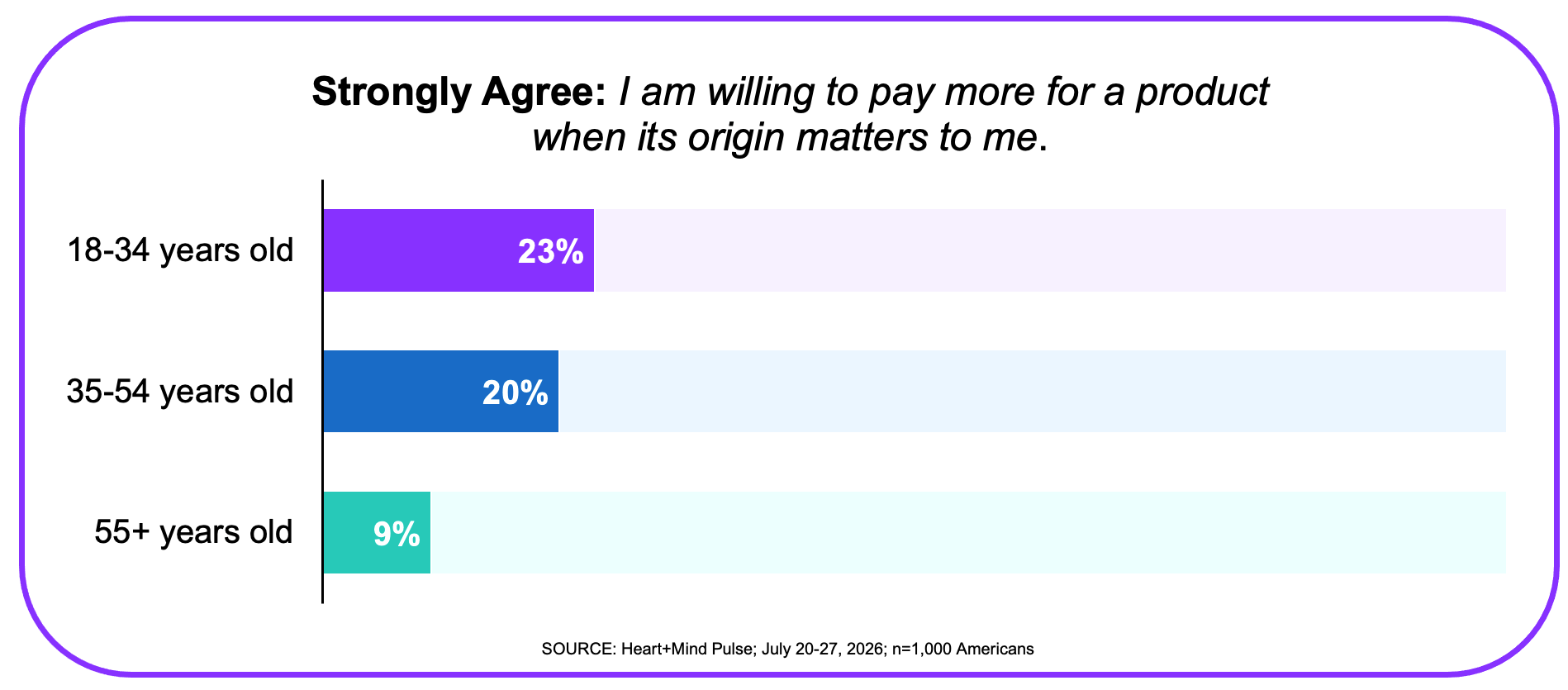
This insight is important because it highlights the potential power of origin branding among younger consumers. The value is not tied to geography itself. Consumers respond to what that geography represents and whether it reinforces quality, authenticity, or meaning.
For marketers, that distinction matters. Consumers pay for perceived value, and origin can become part of that value equation when it supports a compelling story.
Origin Branding Can Become Place Strategy
Origin branding creates value beyond individual products.
When a country, region, state, or community develops a strong reputation around a product category, industry, agricultural tradition, cultural heritage, or experience, that perception can strengthen the broader place itself.
People may become more interested in visiting, supporting local businesses, purchasing related products, or engaging with experiences connected to that location. This creates opportunities not only for brands but also for destinations, tourism organizations, economic development leaders, industry associations, and local communities.
Research findings suggest consumers see meaningful economic value in origin branding:
- 89% believe origin branding positively supports local farmers, producers, makers, or businesses.
- 85% believe it can attract more visitors or tourism.
- 84% believe it creates greater demand for local restaurants, markets, shops, and experiences.
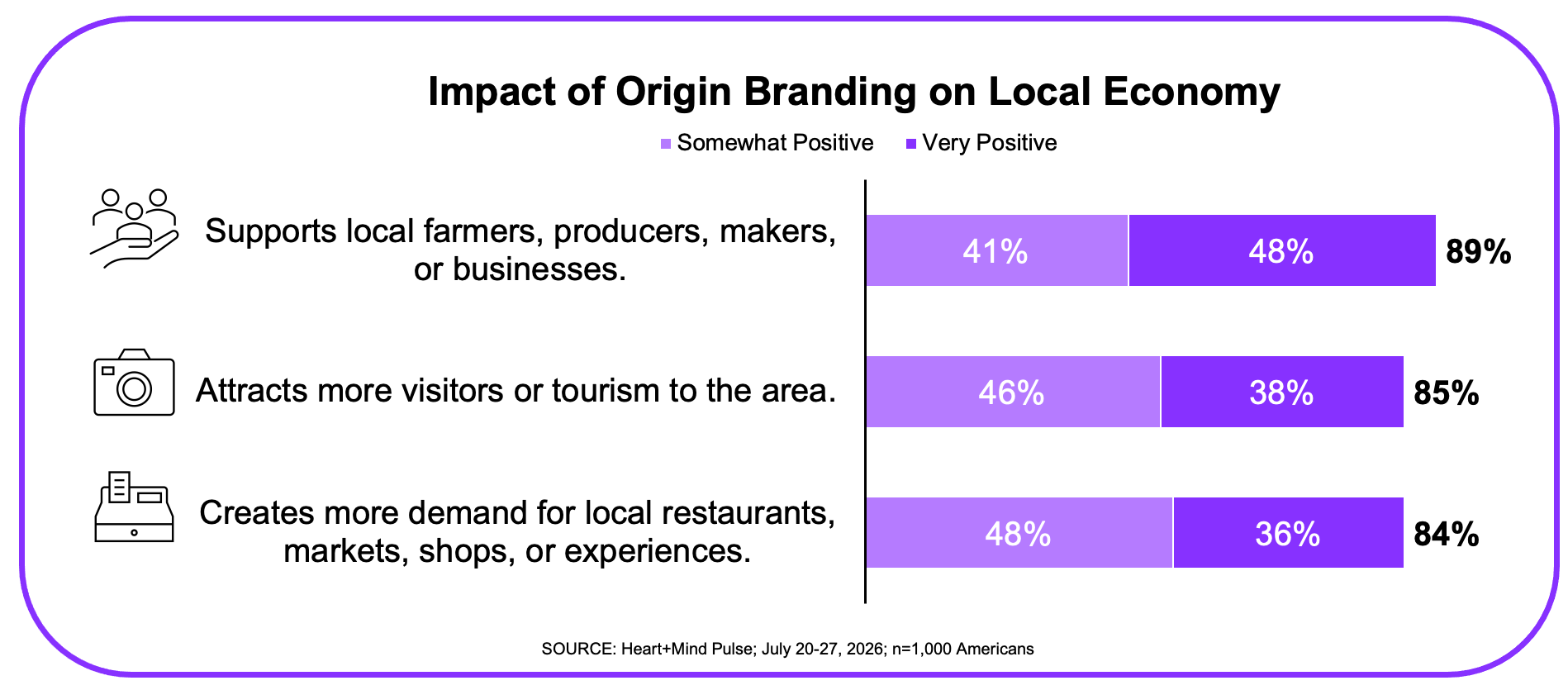
These findings illustrate why place strategy and origin branding often work together. A strong place reputation can help support brands, and successful brands can strengthen perceptions of the places they represent. When that cycle works well, origin branding becomes more than a marketing message. It becomes a shared asset that can support producers, communities, destinations, and local economies.
The Best Place Brands Create Both Rational and Emotional Value
People rarely make decisions based on facts alone.
Origin branding is most effective when it gives people both a reason to believe and a reason to care. The strongest place brands communicate tangible advantages such as expertise, standards, and quality while also creating emotional relevance through stories, culture, people, and traditions.
Those influences work together.
When consumers understand what a place represents and believe the claims being made about it, origin becomes more than information. It becomes part of their decision-making process.

A Strategic Question for Brands, Destinations, and Communities
Organizations across industries should consider a simple but important question:
Do consumers see your place as a meaningful reason to choose?
Understanding the answer requires more than measuring awareness. It requires understanding what consumers believe your place signals, which audiences are most responsive to those signals, and what evidence builds credibility.
The most successful origin branding strategies are grounded in authentic strengths and supported by insights into how people make decisions. They identify the qualities consumers already associate with a place and build a clear connection between those associations and the value being offered.
Organizations that do this effectively can strengthen brands, support destinations, increase visitation, encourage local spending, and create lasting competitive differentiation.
CASE STUDY: Guatemalan Coffees
Connect with Heart+Mind Strategies
For organizations exploring origin branding or place strategy, the first step is understanding what people already believe about the place and how those beliefs shape trust, preference, and value.
Heart+Mind Strategies helps brands, destinations, tourism organizations, economic development groups, associations, and place-based communities understand how people think about place and how those perceptions influence decisions.
Our Heart+Mind approach helps organizations identify the place-based associations, audiences, and proof points that can build trust, preference, economic value, and demand.
If you’re exploring how origin branding or place strategy can create value for your organization, connect with us to start the conversation.
Survey Methodology: The survey consisted of 1,000 online interviews conducted July 20-26, 2026. Respondents for this survey were selected from among those who have volunteered to participate in online surveys and polls.
The data are gathered from one of the largest online panels, which attempts to approximate a cross-section of the U.S. population. To ensure representation of a wide variety of demographic groups, we impose quotas by age, gender, and ethnicity based on U.S. Census data for people aged 18 and older.